
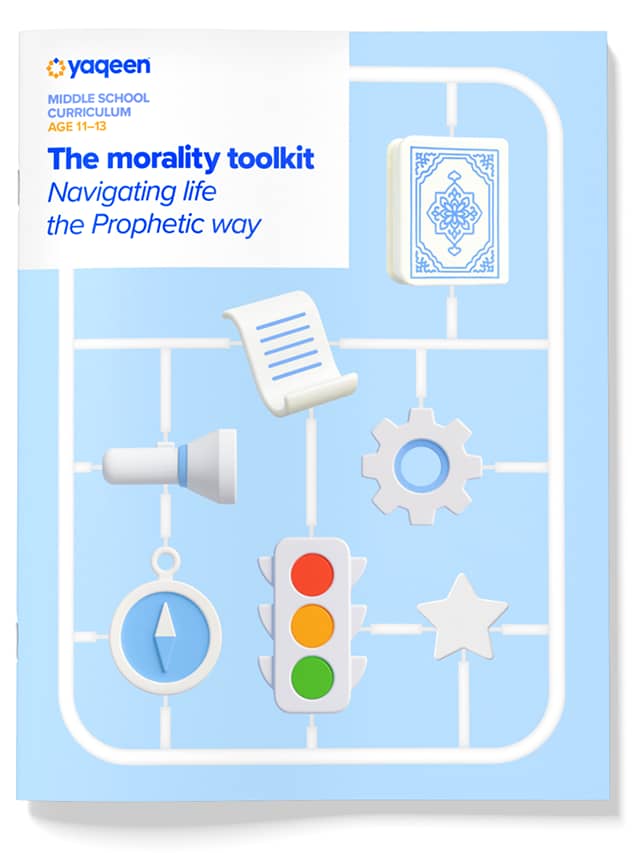
Unit 3.8
The morality toolkit: Navigating life the Prophetic way
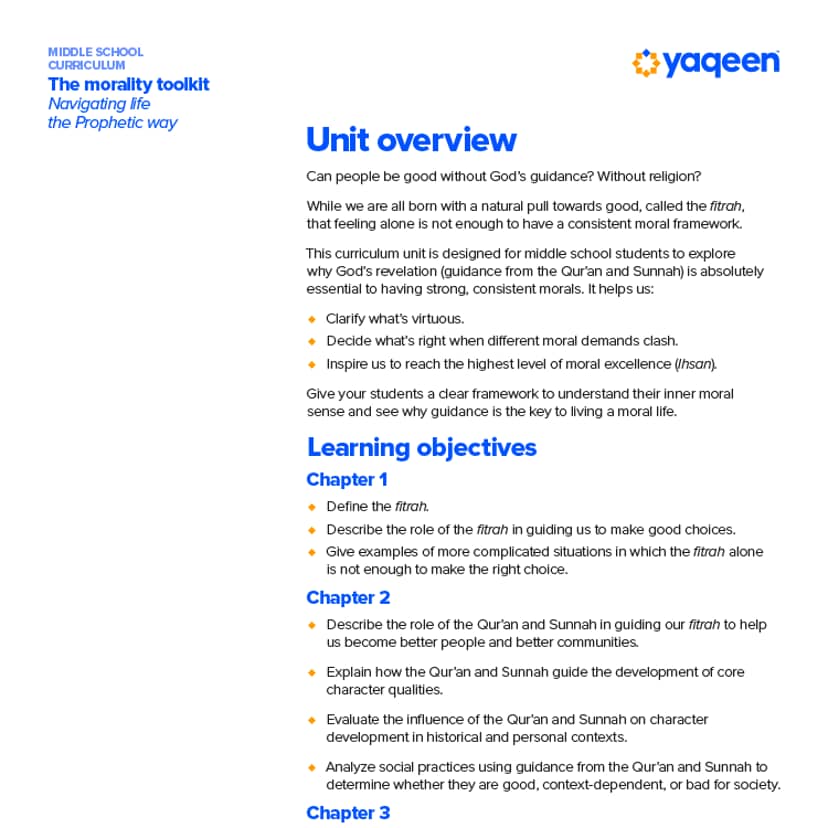
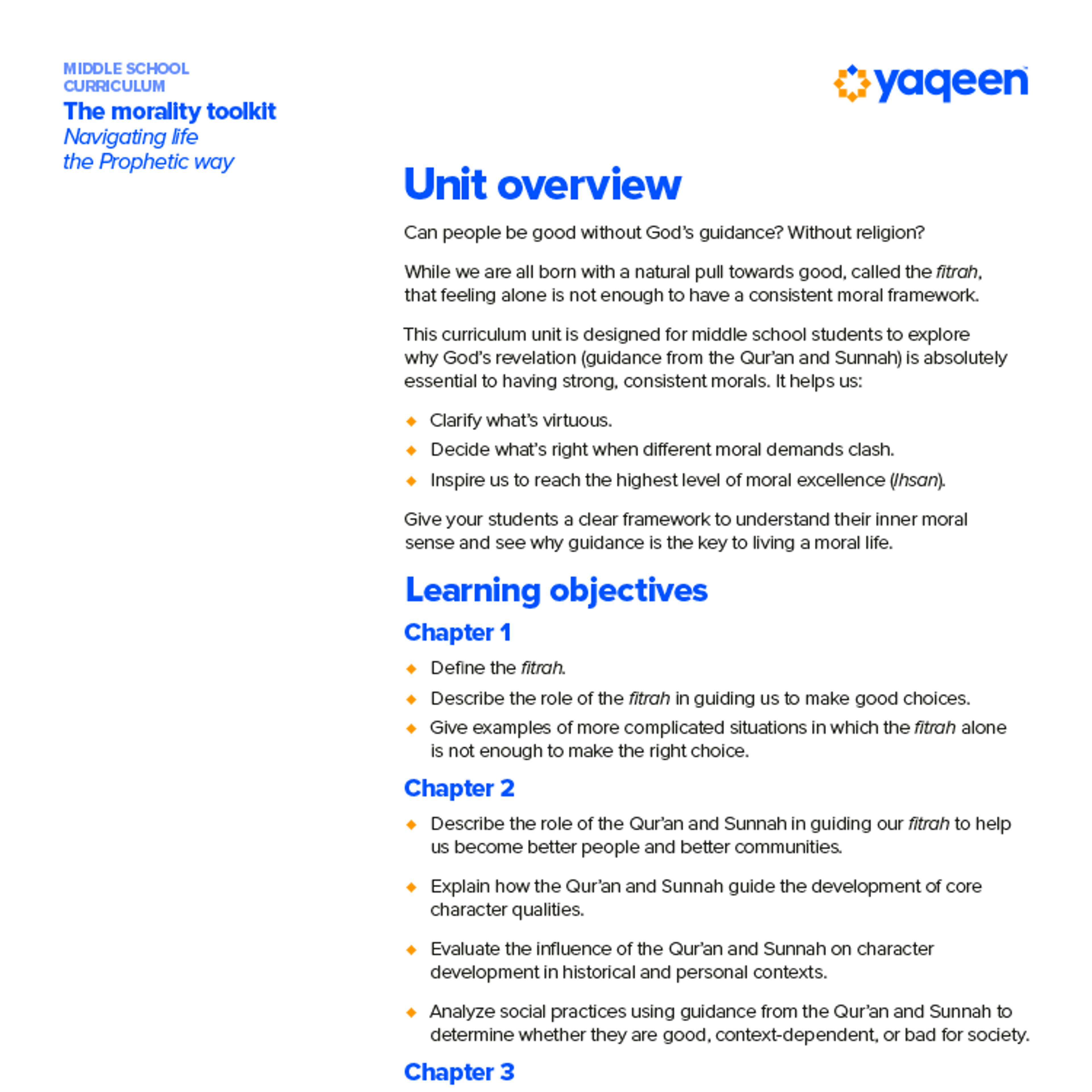
Can people be good without God’s guidance? Without religion?
While we are all born with a natural pull towards good, called the fitrah, that feeling alone is not enough to have a consistent moral framework.
This curriculum unit is designed for students ages 11-13 to explore why God’s revelation (guidance from the Qur’an and Sunnah) is absolutely essential to having strong, consistent morals. It helps us:
- Clarify what’s virtuous
- Decide what’s right when different moral demands clash
- Inspire us to reach the highest level of moral excellence (ihsan)
Give your students a clear framework to understand their inner moral sense and see why guidance is the key to living a moral life.
Introduction
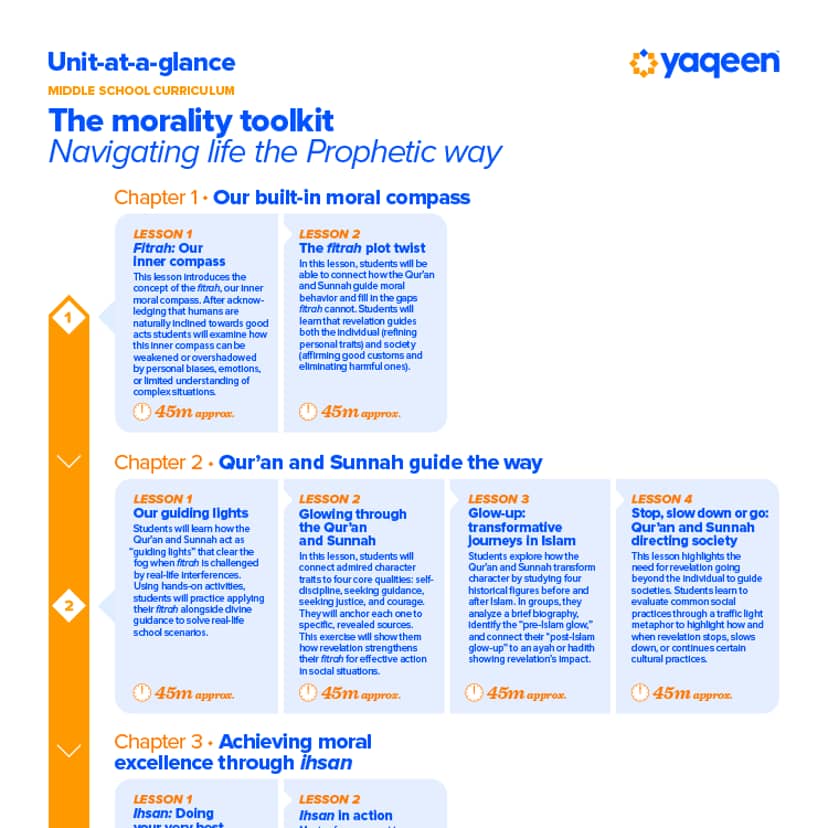
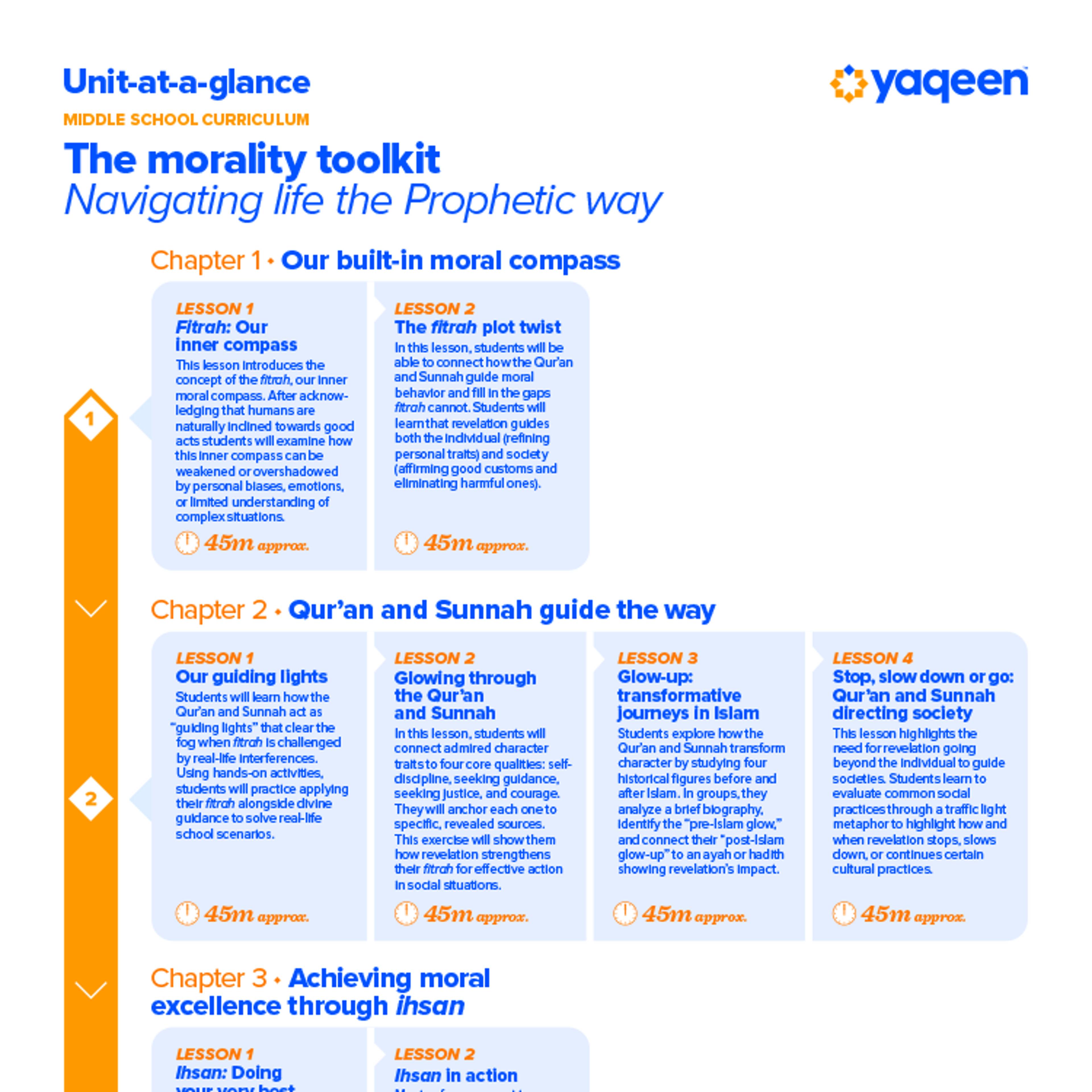
Chapter 1: Our built-in moral compass
In Chapter 1, students are introduced to the concept of our built-in moral compass: the fitrah, its power, and its inherent limitations.
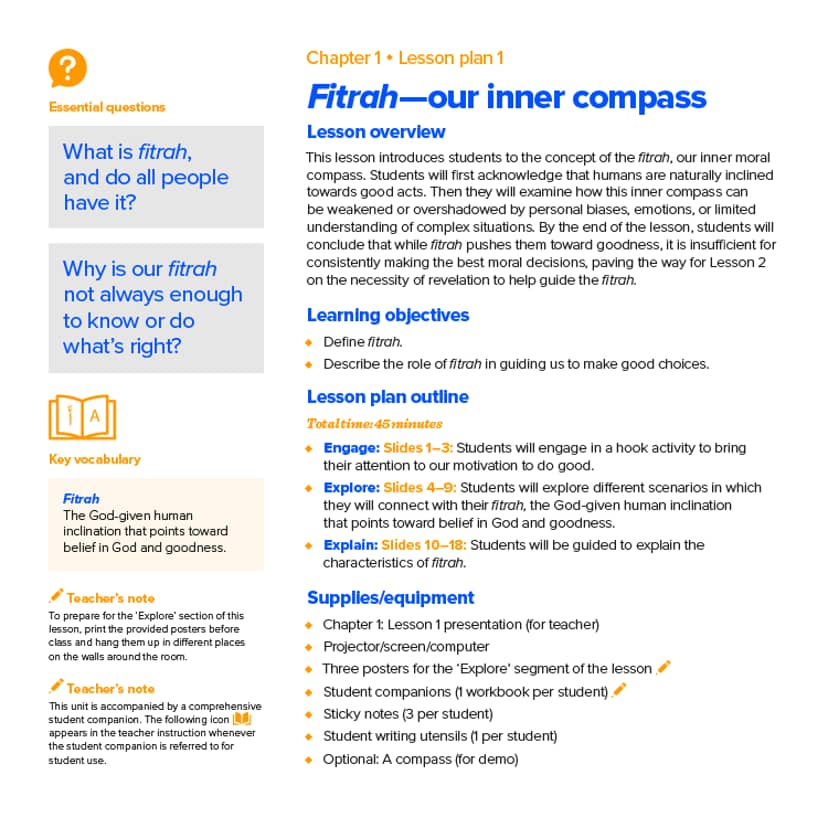
Lesson 1: Fitrah: Our inner compass
This lesson introduces students to the concept of the fitrah, our inner moral compass. Students will first acknowledge that humans are naturally inclined towards good acts. Then they will examine how this inner compass can be weakened or overshadowed by personal biases, emotions, or limited understanding of complex situations. By the end of the lesson, students will conclude that while fitrah pushes them toward goodness, it is insufficient for consistently making the best moral decisions, paving the way for Lesson 2 on the necessity of revelation to help guide the fitrah.
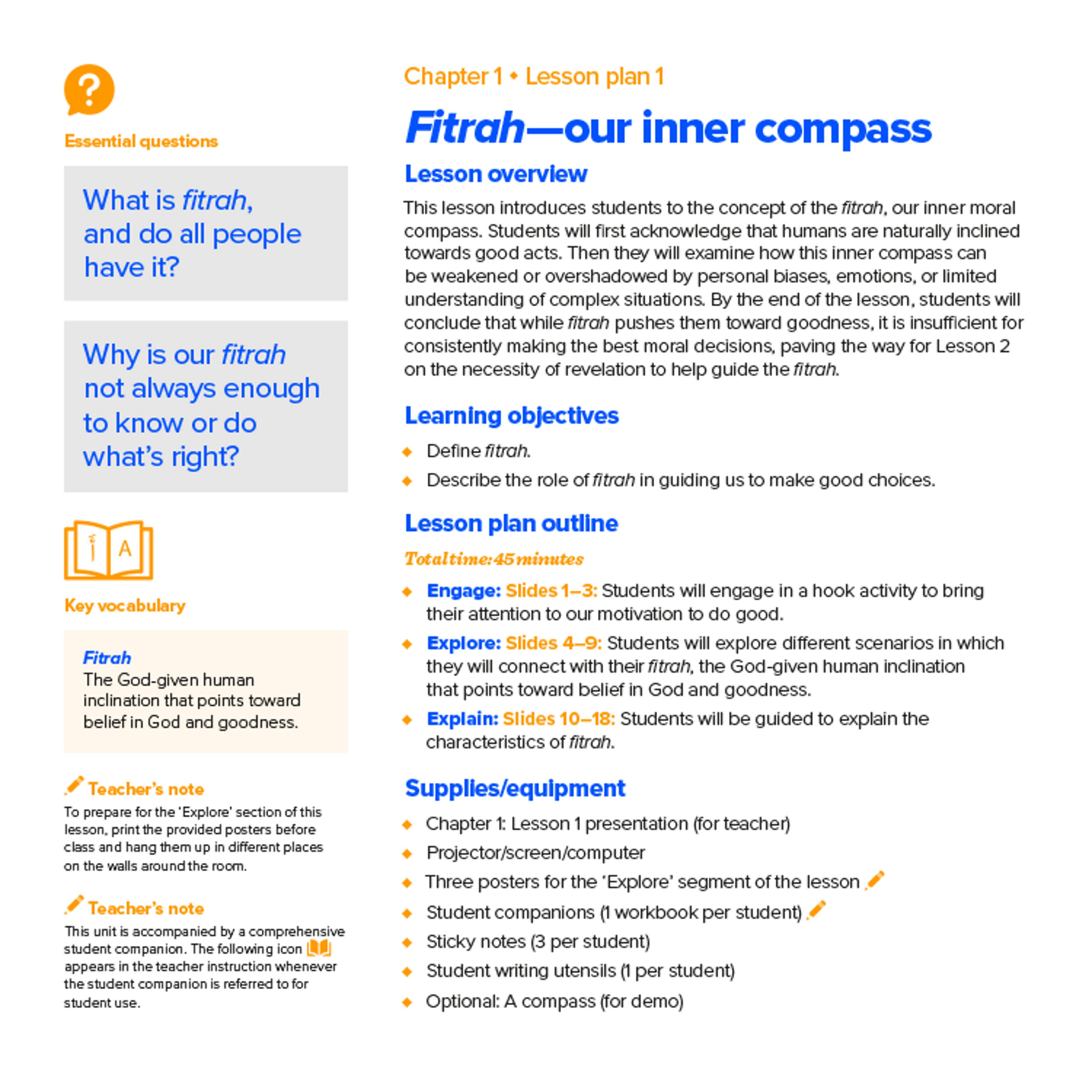
Lesson plan
Slides
Worksheets
Student Companion
Student Companion
Lesson 2: The fitrah plot twist
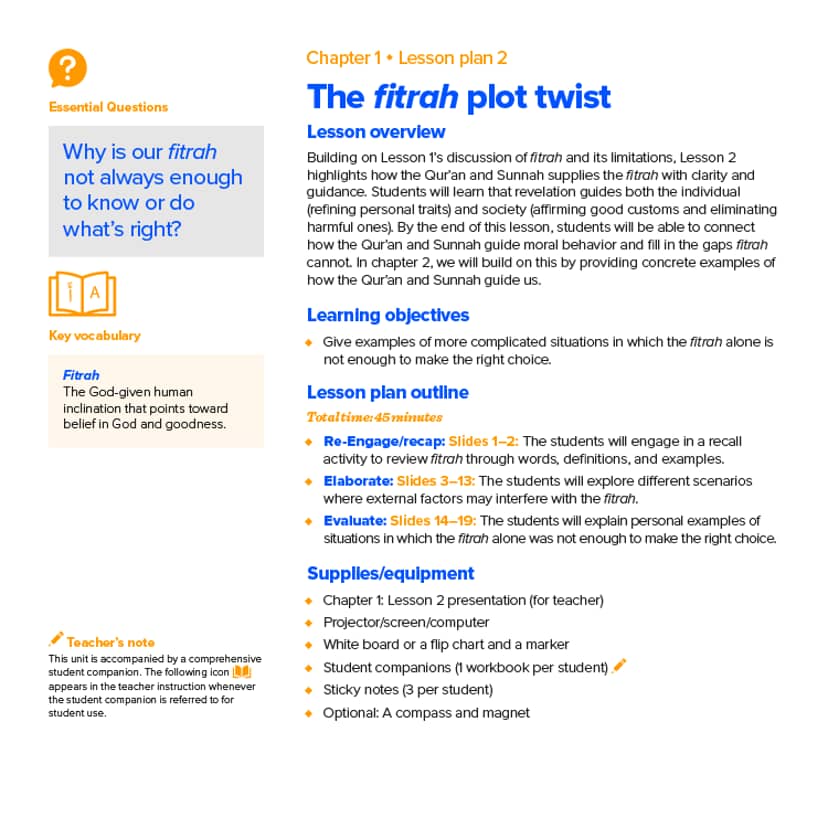
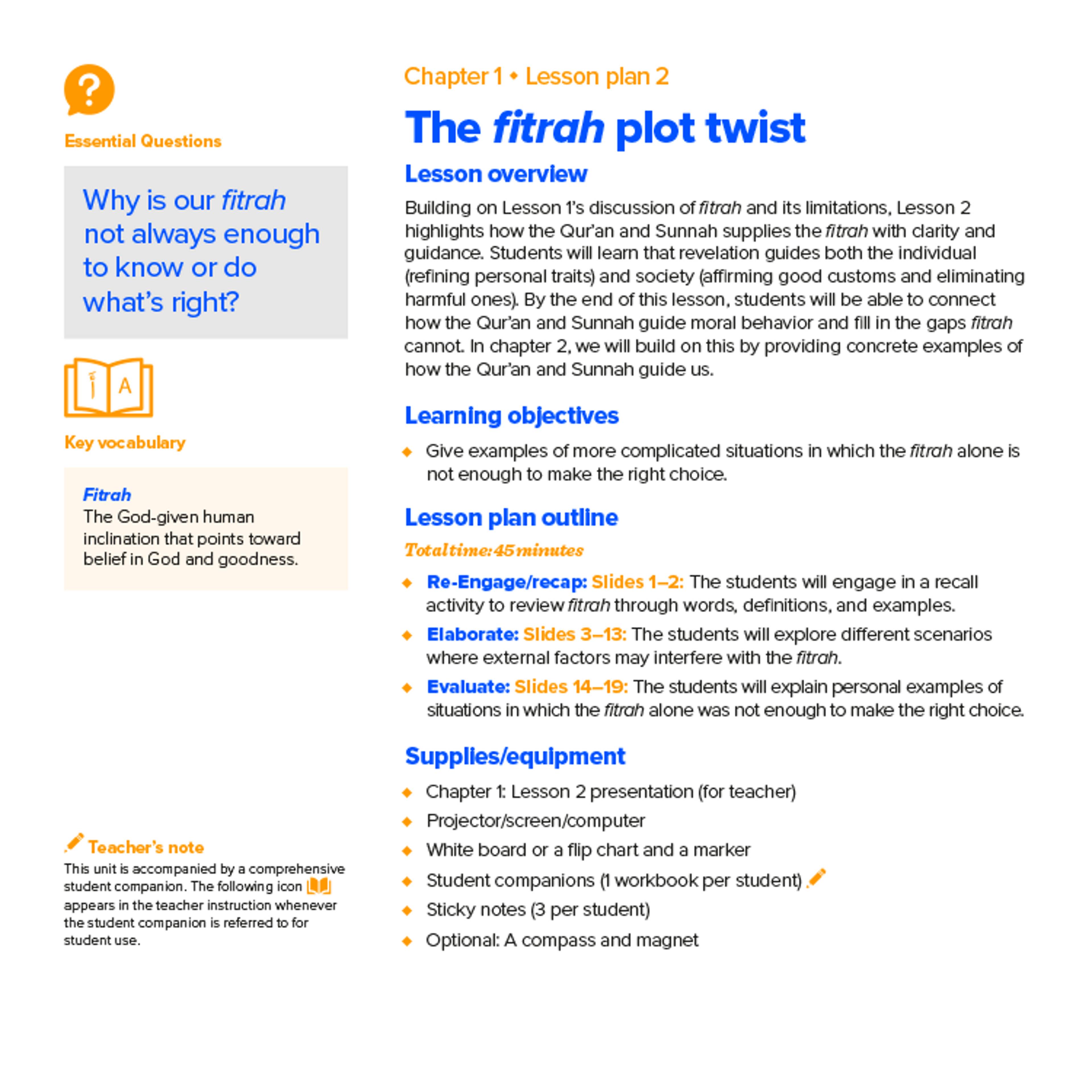
Building on Lesson 1’s discussion of fitrah and its limitations, Lesson 2 highlights how the Qur’an and Sunnah supplies the fitrah with clarity and guidance. Students will learn that revelation guides both the individual (refining personal traits) and society (affirming good customs and eliminating harmful ones). By the end of this lesson, students will be able to connect how the Qur’an and Sunnah guide moral behavior and fill in the gaps fitrah cannot. In chapter 2, we will build on this by providing concrete examples of how the Qur’an and Sunnah guide us.
Lesson plan
Slides
Worksheets
Student companion
Student companion
Feedback
We’d love to hear your thoughts on this unit!